Chamomile
Matricaria chamomilla
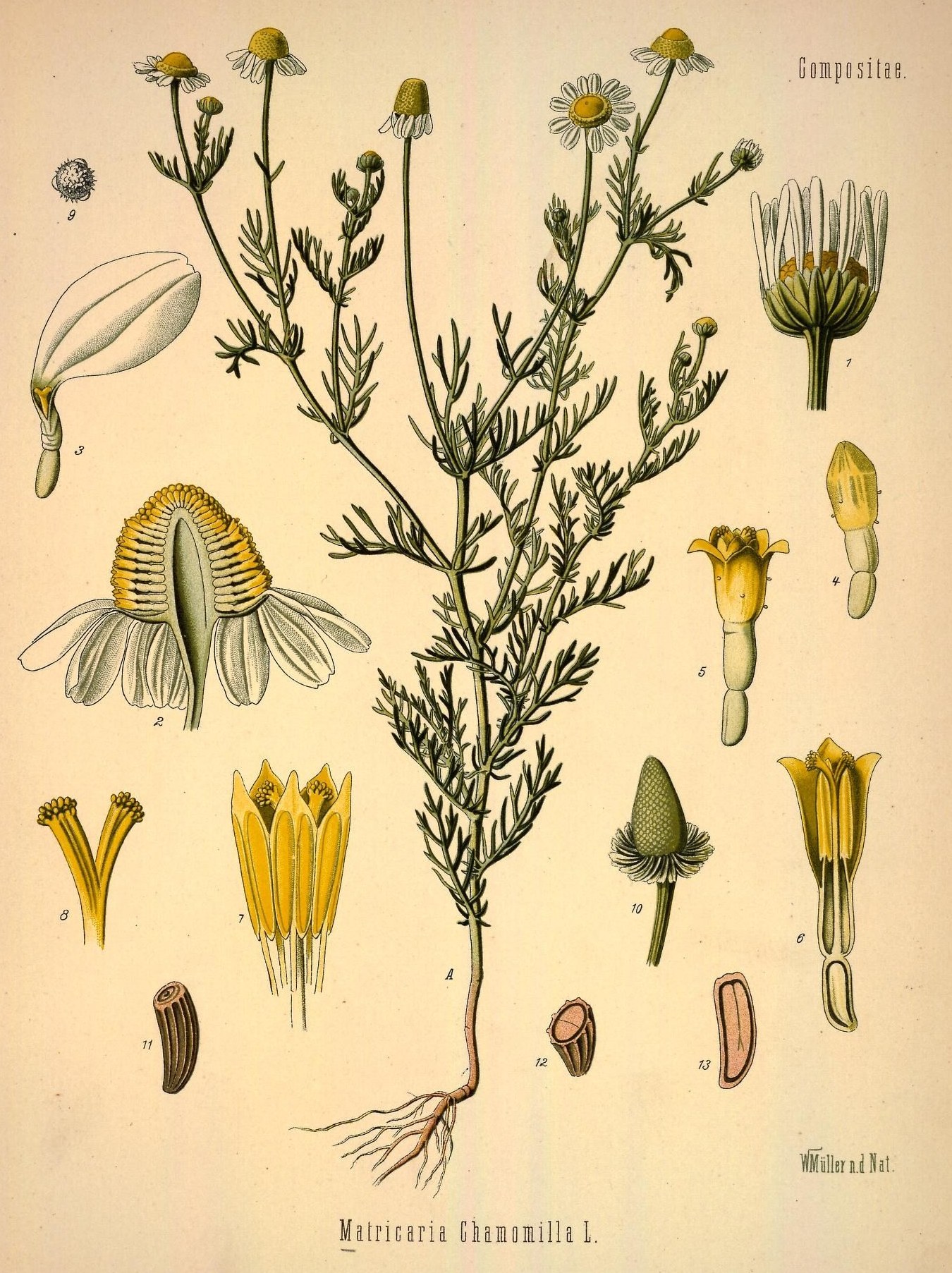
Plate from Köhler's Medizinal-Pflanzen, Gera-Untermhaus. Biodiversity Heritage Library, no known copyright restrictions.
If one plant taught me patience, it was this one. Chamomile asks for almost nothing — a sunny sill, the occasional drink of water — and returns small daisy-like flowers that smell faintly of apples when you brush past them.
Growing it
Sow the fine seeds on the surface of the soil and press them in gently — they need light to germinate. Keep them in the brightest spot you have and let the top of the soil dry between waterings. It’s a plant that prefers a little neglect to too much fuss.
Harvest & drying
Pick the flowers when the white petals are still flat, not yet curled back. Lay them on a tray out of direct sun for a week or so until papery, then keep them in a sealed jar away from light. A single plant, picked often, will keep giving through the summer.
Brewing a cup
Use a heaped tablespoon of dried flowers per mug. Pour over just-off-the-boil water, cover, and steep for five minutes — covering it keeps the calming oils from drifting off in the steam. Strain, and drink it slowly, ideally with nowhere else to be.
A cup of chamomile is less a remedy than a signal — a small ceremony that tells the body the day is done.
A note of caution
Chamomile is in the daisy family, so if you’re sensitive to ragweed or related plants, go gently at first. As always here: this is a gardener’s field note, not medical advice.